
FREE WEBINAR & DOWNLOAD: How does your SCTA performance measure up? Get your SCTA Health Check here.
With decades of experience, Human Reliability’s human factors consultancy can protect the organisation from critical risks and help achieve quality, safety and productivity goals.

Clients often turn to Human Reliability solutions when human error plays a significant role in serious incidents. Moreover, organizations that prioritize safety, quality, and availability goals also rely on Human Reliability practices.
Our team of human factor consultants specializes in identifying and analyzing problems. They employ various techniques such as task, error, and criticality analysis to develop effective solutions and strategies for error prevention.
Recognizing the underlying issue, there is a growing acknowledgement that many human performance problems result from the lack of an effective policy for managing Human Reliability. As a result, our human factors consultants are increasingly engaged in conducting audits and evaluations that delve deeper into an organization’s quality and safety management strategy to identify weaknesses beyond the surface-level manifestations of the problem.
Human Reliability works across a range of sectors with a range of particular expertise, from management audits and risk assessments to incident reporting systems and human error prediction.


One of the first things a HSE inspector might want to see when conducting a Human Factors review is the policy documentation that outlines what should be done. We can assess and help develop such documentation for different HF Topic areas.
For example, we helped a client develop policy and guidance documents to embed Safety Critical Task Analysis (SCTA) at their site.
We worked together on SCTA activities, including an exercise on identifying and prioritising COMAH-critical tasks, and an SCTA workshop on a critical task. Additionally, some of the people from site attended our SCTA course to consolidate their learning.
We collaborated with the site to develop guidance documents that served to act as a benchmark for carrying out SCTAs in a manageable and sustainable manner. An example from the document developed was a standard for assuring human performance that outlines the competency requirements, the roles and responsibilities, and the actions to be taken related to the SCTA process.

One of the first things a HSE inspector might want to see when conducting a Human Factors review is the policy documentation that outlines what should be done. We can assess and help develop such documentation for different HF Topic areas.
For example, we helped a client develop policy and guidance documents to embed Safety Critical Task Analysis (SCTA) at their site.
We worked together on SCTA activities, including an exercise on identifying and prioritising COMAH-critical tasks, and an SCTA workshop on a critical task. Additionally, some of the people from site attended our SCTA course to consolidate their learning.
We collaborated with the site to develop guidance documents that served to act as a benchmark for carrying out SCTAs in a manageable and sustainable manner. An example from the document developed was a standard for assuring human performance that outlines the competency requirements, the roles and responsibilities, and the actions to be taken related to the SCTA process.
We were approached with a request to carry out a Safety Critical Task Analysis (SCTA) on starting an induction furnace.
Prior to the SCTA workshop, we used the SOP to develop an initial task analysis in the SHERPA software, and to identify potential high-risk actions and issues in the task analysis. We reviewed and developed this analysis with a multi-disciplinary team in the workshop.
We identified improvements that may benefit the site. One of them was to optimise the Human-Machine Interface (HMI) by adding some prompts and redesigning the screen so that it would help with the user experience. Prompts are a useful way to direct the operators’ attention to the screen as it requires them to take action to progress the task. Furthermore, we suggested some ways to include more visual feedback that would help the operators understand the status of the induction furnace. By including more salient cues like installing lights that reflect the induction furnace’s state, this provides the operator and the team the opportunity to build a mental model of the task, which will help reduce the likelihood of error. We also discussed limiting the energy provided to the induction furnace to reduce the chance of a super heat event. Overall, the analysis received a positive response from the site and they were keen to implement the actions suggested.
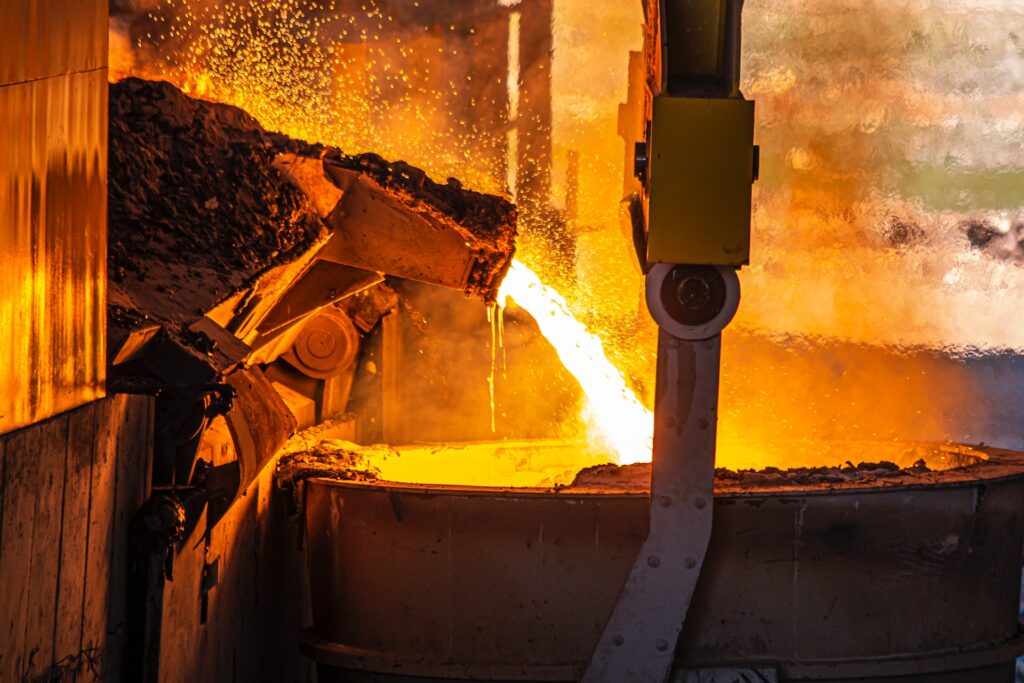
We were approached with a request to carry out a Safety Critical Task Analysis (SCTA) on starting an induction furnace.
Prior to the SCTA workshop, we used the SOP to develop an initial task analysis in the SHERPA software, and to identify potential high-risk actions and issues in the task analysis. We reviewed and developed this analysis with a multi-disciplinary team in the workshop.
We identified improvements that may benefit the site. One of them was to optimise the Human-Machine Interface (HMI) by adding some prompts and redesigning the screen so that it would help with the user experience. Prompts are a useful way to direct the operators’ attention to the screen as it requires them to take action to progress the task. Furthermore, we suggested some ways to include more visual feedback that would help the operators understand the status of the induction furnace. By including more salient cues like installing lights that reflect the induction furnace’s state, this provides the operator and the team the opportunity to build a mental model of the task, which will help reduce the likelihood of error. We also discussed limiting the energy provided to the induction furnace to reduce the chance of a super heat event. Overall, the analysis received a positive response from the site and they were keen to implement the actions suggested.
Learn more about our human factors consultancy solutions and get your questions answered with a quick call-back request.
A human factors consultancy works with organisations to systematically understand, assess, and reduce the human-related risks in their operations. Rather than treating human error as inevitable or blaming individuals, human factors consultancy examines the wider system — tasks, equipment, procedures, work environment, and organisational factors — to identify where and why errors are likely to occur, and to put in place practical, evidence-based controls. In high-hazard industries such as chemicals, oil and gas, pharmaceuticals, and nuclear, this kind of specialist human factors consultancy is essential for protecting people, assets, and reputation.
You should consider engaging a human factors consultant when facing any situation where the performance of people is critical to safety or operational outcomes. Common triggers include compliance with regulatory requirements such as COMAH or offshore safety regulations, following an incident or near miss, planning a major change to plant or processes, or recognising that existing procedures or control systems are not performing as intended. A human factors consultant brings a structured, systematic perspective that internal teams — however experienced — often cannot replicate on their own.
HRA offers a comprehensive range of human factors consultancy services covering the key areas that regulators and industry bodies expect organisations to address. These include human factors risk assessment, Safety Critical Task Analysis (SCTA), incident investigation, procedure design and review, control room and alarm management studies, critical communications analysis, competence management support, and organisational change assessments. We tailor our approach to each client’s needs and sector, drawing on over four decades of specialist experience in high-hazard industries.
Human Reliability’s consultants specialise in systematic human factors risk assessment, with Safety Critical Task Analysis (SCTA) at the core of our approach. We cover the full range of human factors topic areas recognised by the HSE and major industry bodies: Managing Human Performance, Human Factors in Process Design, Critical Communications, Design and Management of Procedures, Competence Management Systems, and Managing Organisational Factors — including their practical implementation and management within client organisations. Control room and alarm management studies are a particular area of growth, reflecting increasing industry demand. Our consultants work at the intersection of research-grade rigour and real-world practicality, applying theory to genuine operational problems in a systematic and thorough manner.
HRA’s human factors consultants work primarily in high-hazard industries where the consequences of human error are most severe. Our core sectors include the process industries (chemicals, oil, gas, and petrochemicals), pharmaceuticals and biotechnology, power generation, healthcare, defence, and food and beverage manufacturing. We have extensive experience supporting organisations regulated under COMAH and the UK offshore safety regulations, and have worked with organisations operating under equivalent international frameworks. Our systematic, methodology-driven approach means we can bring genuine value across sectors, adapting proven human factors methods to the specific hazards, tasks, and regulatory contexts of each industry.
Yes. Our human factors consultancy work has tangible, demonstrable impact, even if the most important outcome — accidents that did not happen — is inherently difficult to quantify. We regularly support organisations that have received action notices from the HSE, helping them fulfil their legal human factors obligations, de-escalate regulatory interventions, and return to a position of confident compliance. In one representative engagement, a focused human factors assessment of proof test procedures — a project of around six to seven days in total — revealed systemic vulnerabilities affecting hundreds of safety-critical instruments across a large industrial site. That single assessment triggered a substantial, site-wide programme of safety improvements. Collectively, our project work has generated significant insight into operational risk and produced meaningful, lasting improvements to safety — improvements whose full value lies precisely in the incidents they have prevented.